

 es / us
 en / ca

You are permanently removing this notification from your Owner Site Notification Feed.
Do you wish to proceed?
How often should you change your air filter?
If you drive a Chrysler, Dodge, Jeep® or Ram brand vehicle, replacing your engine air
filter and cabin air filter on schedule is one of the easiest ways to protect performance, fuel
efficiency and interior air quality. In this Mopar® air filter guide, we’ll explain how often to change your air
filter, the difference between engine and cabin air filters, warning signs of a dirty filter and why using Mopar
OEM air filters matters.
This guide answers the most common questions about engine and cabin air filter replacement for Chrysler, Dodge, Jeep
and Ram brand vehicles.
- What’s the difference between an engine and cabin air filter?
- How often should I change my air filter?
- How do driving conditions affect filter life?
- What are signs I might need to replace your air filter?
- How will I know if my air filter is dirty?
- What type of air filter do I need?
- How do I replace my engine air filter?
- How often should I change my cabin air filter?
- What are signs I might need to replace your cabin air filter?
- What type of cabin air filter do I need?
- How do I replace my cabin air filter
- Frequently Asked Questions
What’s the difference between an engine air filter and a cabin air filter?
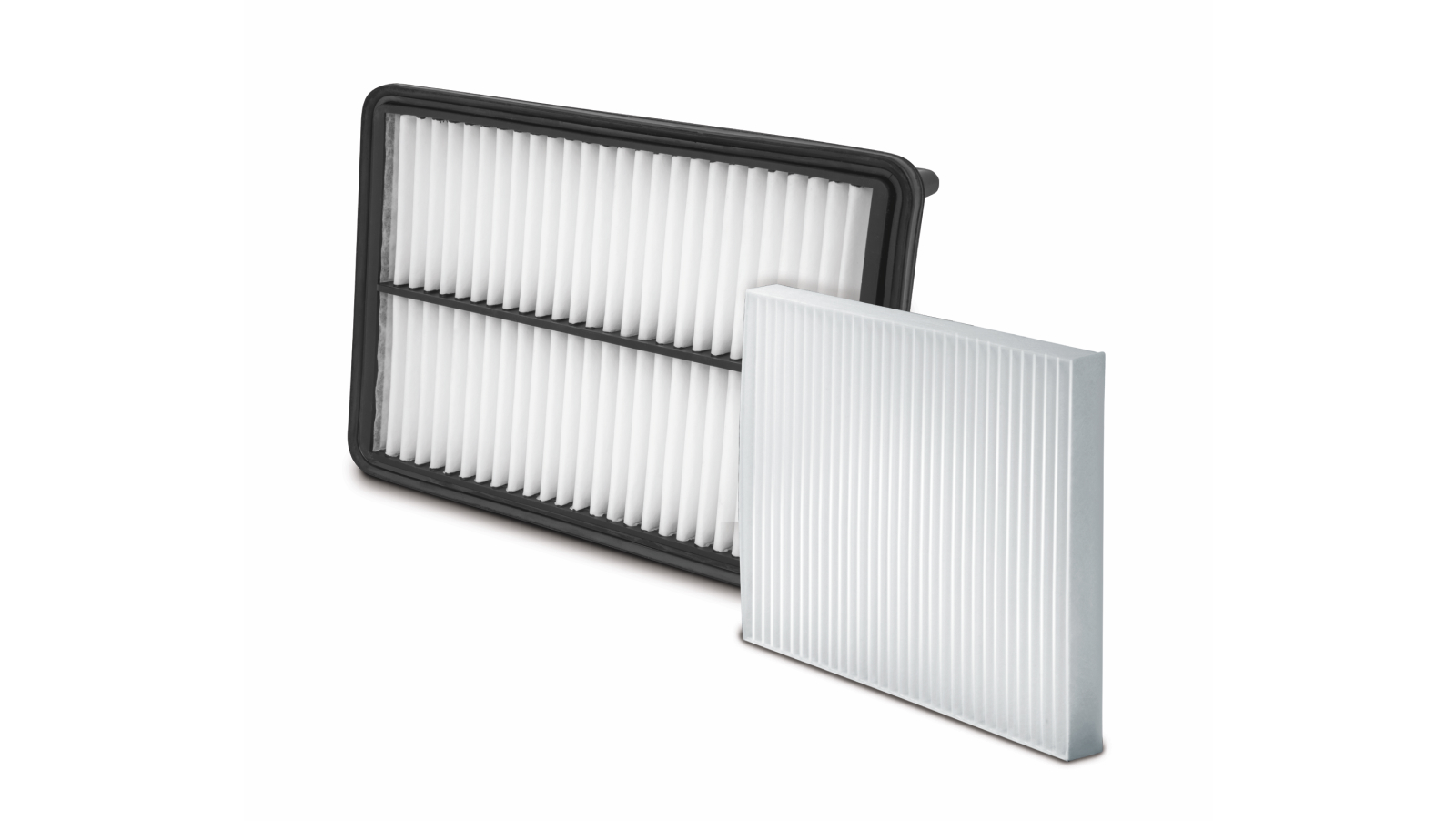
The engine air filter protects your engine by providing clean air to the engine while a cabin air filter protects you and your passengers by providing clean air to the passenger cabin. While both are essential, they are separate systems with different purposes. Knowing the difference helps you understand why they matter and how often to change them.
What does the Engine Air Filter do?
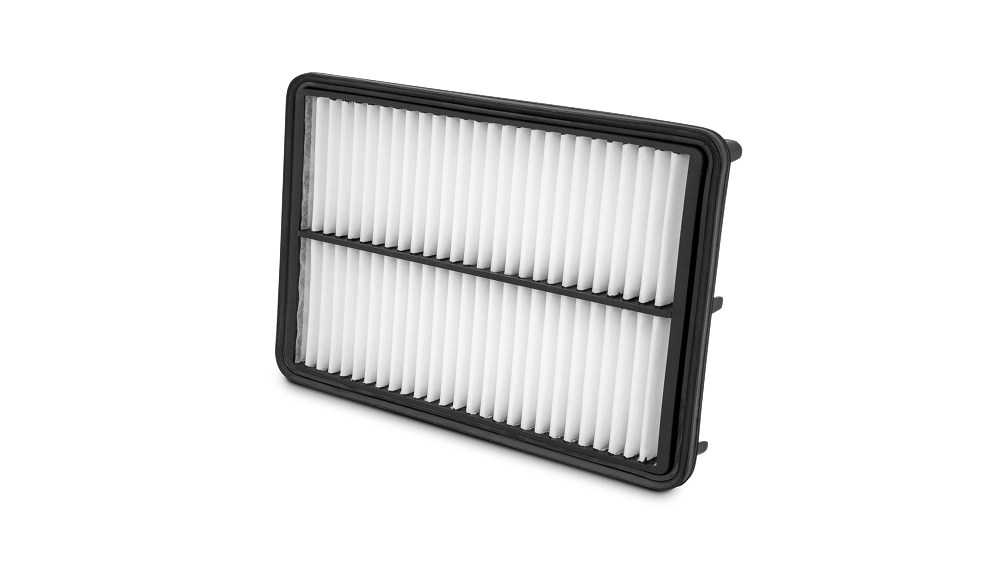
The engine air filter protects your engine by preventing dirt, dust and debris from entering the combustion chamber. A clean Mopar engine air filter helps:
- Improve fuel efficiency
- Maintain horsepower and acceleration
- Protect engine components
What does the Cabin Air Filter do?
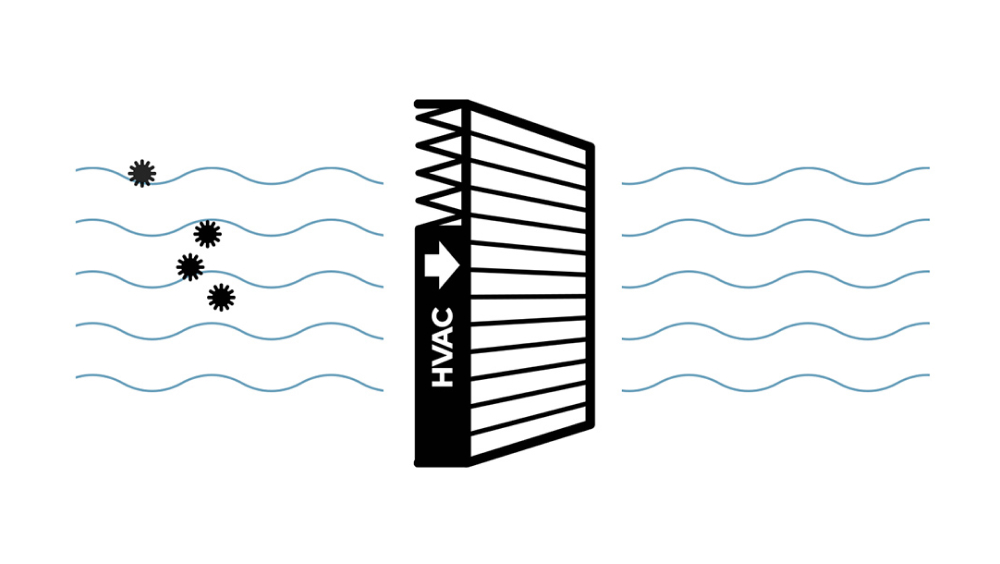
The cabin air filter cleans the air that enters the heating and air conditioning system into the passenger compartment, keeping dust, pollen, allergens, odors and other pollutants from entering. A clean Mopar cabin air filter for your Chrysler, Dodge, Jeep or Ram brand vehicle also optimizes airflow.
Engine Air Filter Replacement Guide
How often should I change my air filter?
In general, your air filter should be replaced every 12,000 to 15,000 miles, about the average amount of miles an American drives each year. However, this can vary. As a good rule of thumb, you should check your air filter each time your oil is changed.
How do driving conditions affect filter life?
Your specific driving conditions can alter how often you need to change your air filter. The following examples can either shorten or extend how often you need to change it:
- Dusty, rural, off-road or construction-zone driving will require that your filter be replaced more often (around 6,000–10,000 miles)
- City driving with stop-and-go traffic – around 12,000 miles
- Highway driving, in cleaner conditions – it may last up to 15,000 miles
What are signs that you might need to replace my engine air filter?
- Reduced fuel efficiency
- Sluggish acceleration or performance
- Black smoke from the exhaust
- Unusual engine sounds
Always check your owner’s manual for your vehicle’s exact recommendations or consult your Mopar technician for service. To find your owner’s manual, check your glovebox. For a digital copy, go to Mopar.com, select your vehicle’s brand, model and year.
How will I know if my air filter is dirty?
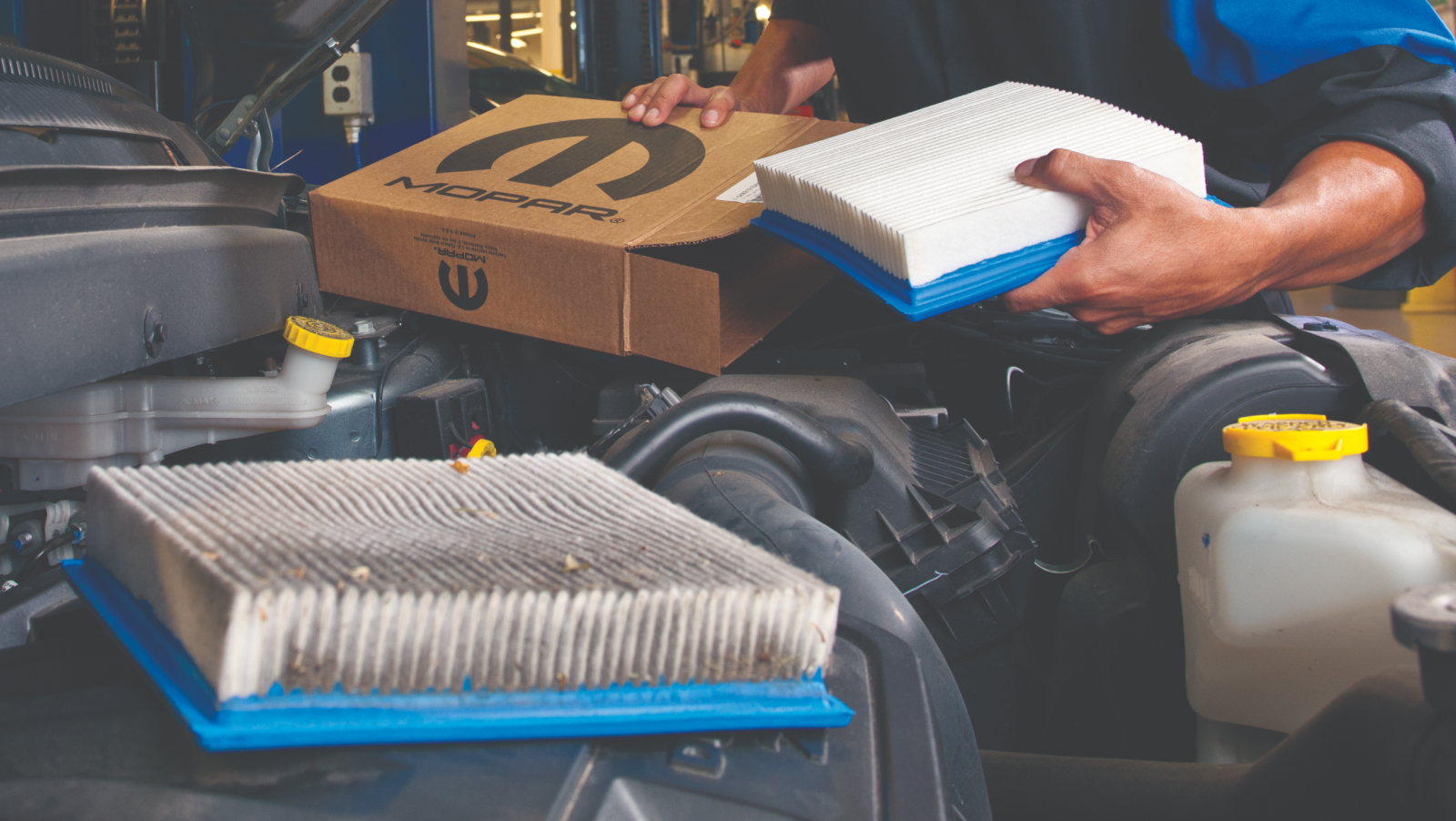
To inspect the air filter, consult your owner’s manual to:
- Open your hood
- Find the black, rectangular or square-like air filter housing
- Release the clips or loosen the screws to remove the lid
- Remove your filter, noting how it is positioned within the housing (which end faces forward, which side is facing up, etc.)
- Hold it up to a light source
- If you can’t see light through the pleats and/or it looks dark, dusty, clogged, (or worse) tears, holes or bent pleats, it should be replaced
While you have the filter removed, now is a good time to inspect the housing to ensure that it is clean and free of significant dirt or debris. Remove any large pieces of debris by hand and vacuum out the inside of the housing.
What type of air filter do I need?
To ensure fit and optimize performance, we recommend that you only use high-quality Mopar filters which are designed by the manufacturer for your specific vehicle. The quality of replacement engine air filters on the market today varies greatly. Don’t take chances with an inferior air filter which may not fit properly and could damage your engine cylinders. To find the correct Mopar OEM air filter for your Chrysler, Dodge, Jeep or Ram brand vehicle, select your make, model and year at:https://store.mopar.com/air-filters to ensure it will fit your vehicle. Or click on Find a Dealer to contact your local Mopar dealer’s parts department.
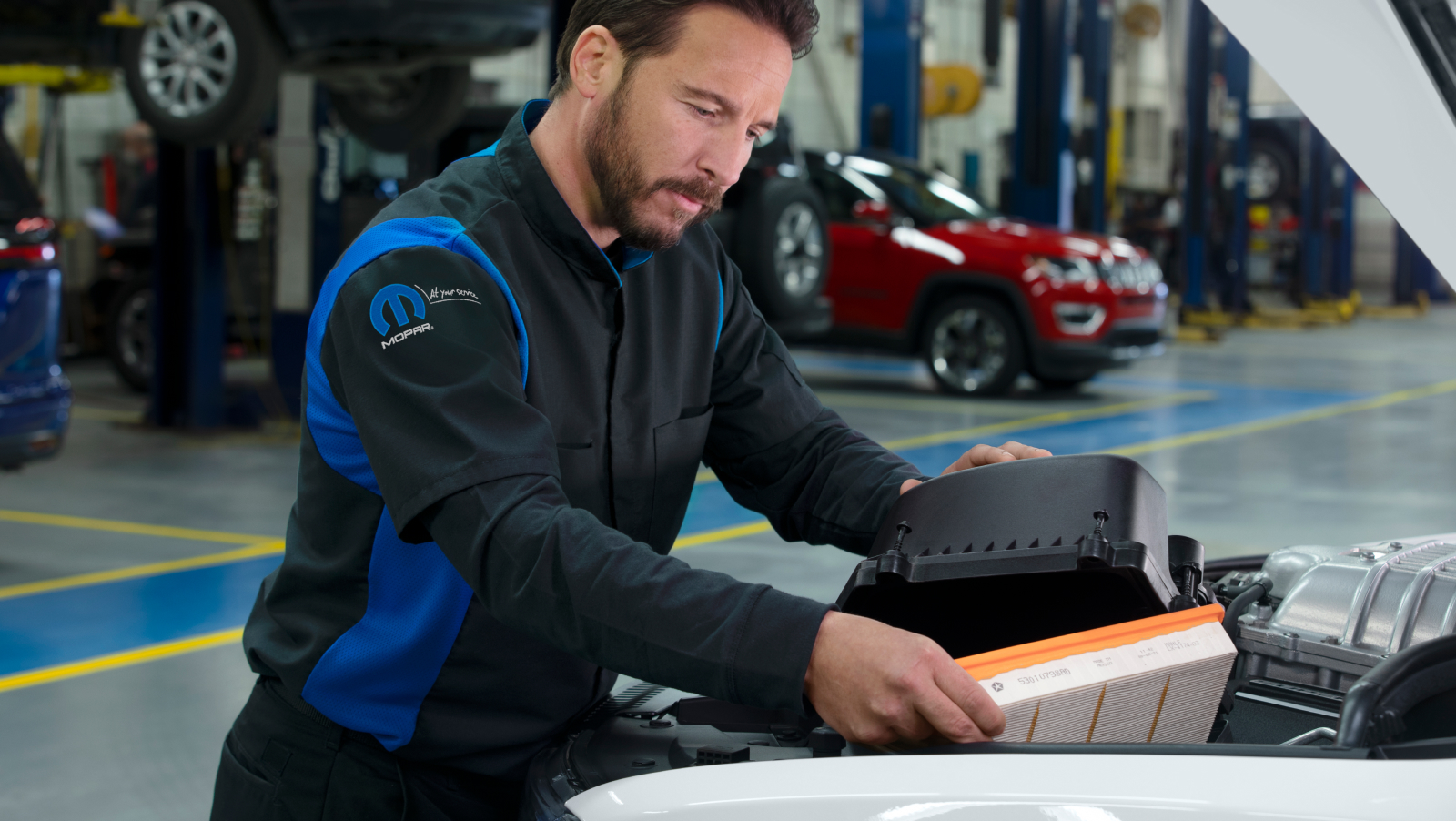
How to replace my Mopar engine air filter?
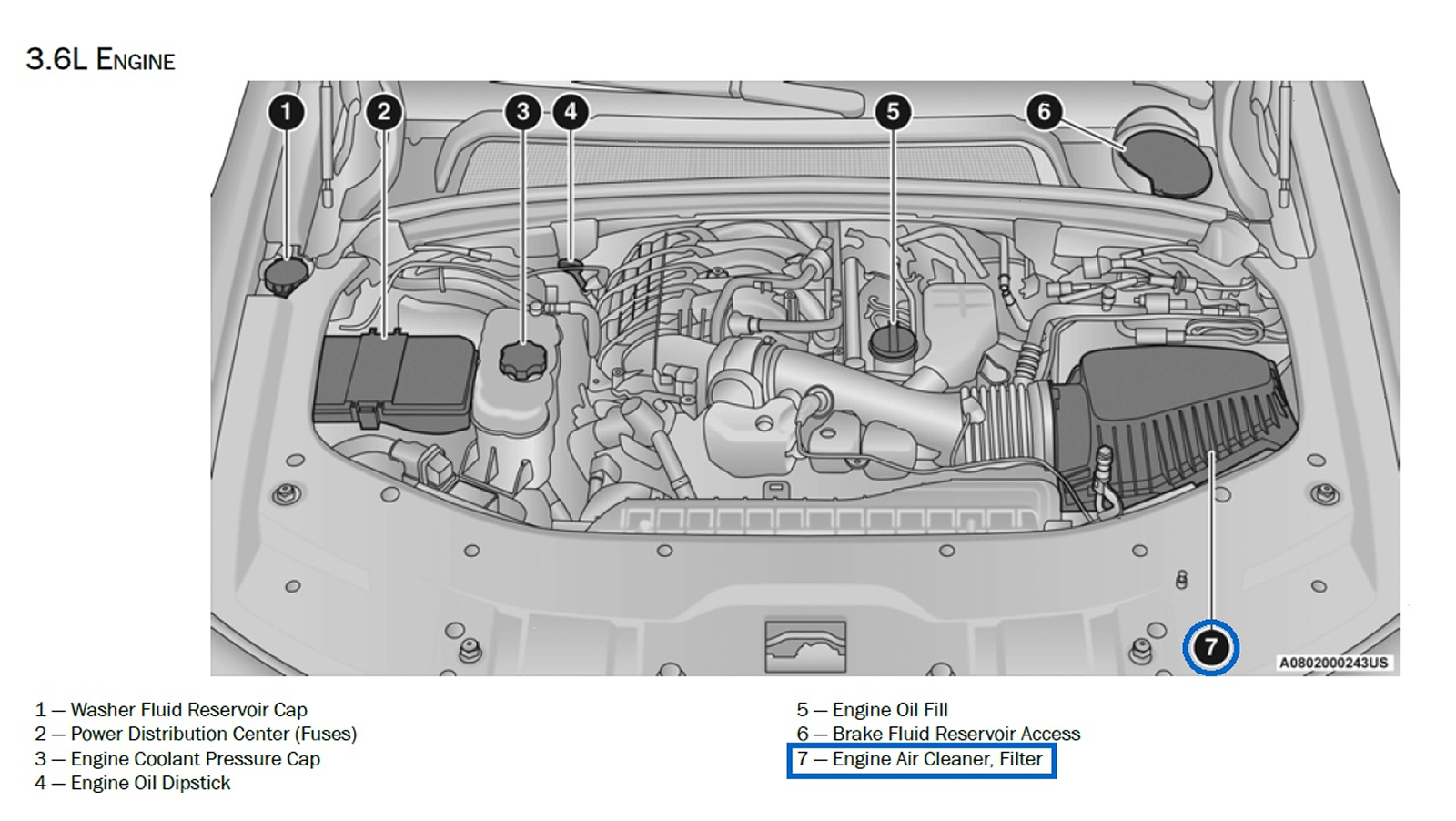
Step-by-step guide to replace your Mopar engine air filter
- Locate the Filter:
- Pop the hood
- Find the large, black plastic air filter housing (typically on the driver’s side with a larger tube connecting it to the engine
- It’s always good to take a picture of how everything is assembled before you begin so that you know how it’s supposed to look when you’re finished
- Access the Filter:
- Clips: Open the retaining clips (often 4-6) on the airbox lid by unlatching them from the housing
- Screws: Loosen the screws (Phillips or 8mm socket) on the lid (they often stay in the lid so you may not want to remove them completely; only until they release the lid from the housing)
- Hoses/Sensors:
- Carefully detach any small vacuum hoses or sensors connected to the lid, pulling them off gently
- This will avoid bending, kinking or breaking them
- Remove the Old Filter:
- Lift the airbox lid and pull out the old filter – note which side is facing up
- Vacuum any leaves or debris from the empty housing, being careful not to drop anything into the intake opening
- Install the New Filter: Place the new Mopar filter in the housing in the same position as the old filter, ensuring it sits flush and correctly oriented (pleats often face up or inwards, check your vehicle manual)
- Reassemble:
- Put the lid back on, aligning tabs and clips
- Reattach any hoses/sensors securely
- Snap the clips firmly into place or tighten the screws, being careful not to overtighten
Always consult your vehicle owner’s manual for model-specific details, as some designs vary slightly (e.g., cold air intakes have different steps).
Cabin Air Filter Replacement Guide
How often should I replace my cabin air filter?
The cabin air filter should be replaced about every 15,000 to 20,000 miles. But, like the engine air filter, if you often drive in high-traffic urban areas, near heavy pollution, or in regions with a lot of pollen, it may need to be replaced more often.
What are signs that I might need to replace your cabin air filter?
- Reduced airflow from vents
- Persistent musty or unpleasant odors
- Increased dust inside your vehicle
- More allergy symptoms while driving
It is important to check it regularly.
What type of cabin air filter do I need?
Like engine filters, the quality of replacement cabin air filters varies greatly. Some manufacturers will cut
corners on materials which can impact how well it fits, how well it works and for how long it will work.
Cabin air filters are relatively inexpensive. And since they only need to be replaced about once per year, protect
your ride with Mopar cabin air filters designed exclusively by the manufacturer for your specific vehicle.
To find the right cabin air filter for your vehicle:
- Go to https://store.mopar.com/
- Click on Models
- Select your make and model
- Click on Cabin Air Filters
To refine your results even further and ensure an exact fit:
- Click on the All Years drop down menu
- Select your vehicle’s model year
Or click on Find a Dealer to contact your local dealer’s parts department. Your local Chrysler, Dodge, Jeep® or Ram dealer can help you with the Mopar® OEM maintenance parts you need to do it yourself, or they can help you stay on top of all maintenance parts and intervals by servicing it for you.
How do I replace my Mopar Cabin air filter?
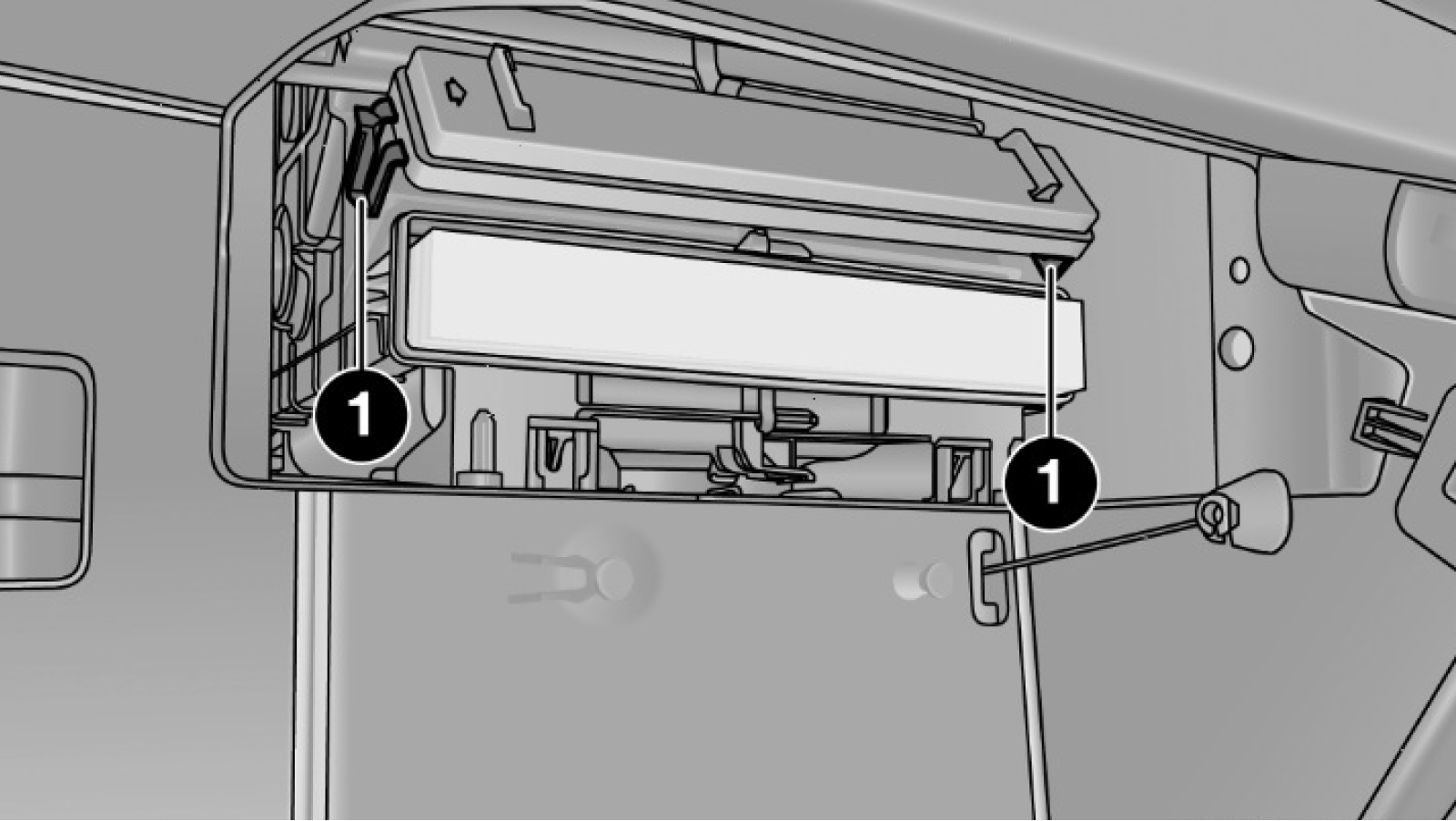
Step-by-step guide to replace your Mopar cabin air filter
To replace a Mopar cabin air filter, you generally access it through the passenger-side glove box or, in some sedan models, through a panel under the hood. Mopar filters are the original equipment manufacturer (OEM) parts for Chrysler, Dodge, Jeep and Ram brand vehicles.
General Replacement Steps (Glove Box Access)
Most modern RAM trucks and Jeep SUVs (like the Wrangler or Grand Cherokee) use this method:
- Open and empty the Glove Box: Clear out all items to prevent them from falling when the box is lowered.
- Disconnect the Damper Cord: Locate the tether/cord on the right side of the glove box. Pull the clip slightly toward you to disengage it and let it retract gently into the dash.
- Lower the Glove Box: Press inward on the side "travel stops" (plastic tabs) to allow the glove box to swing down past its normal opening point. On some models, you may need to pull the box off its bottom hinges entirely.
- Remove the Filter Cover: Locate the rectangular plastic door behind the glove box. Pinch the locking tabs on both sides and pull the cover off.
- Remove the old filter, noting which side it up using the airflow direction arrow printed on the filter.
- Airflow Direction: For most Mopar vehicles, the arrow on the filter should point down toward the floor.
- Reassemble: Slide the new filter in, matching the direction of the airflow direction of the old filter, snap the cover back on until it clicks, and reattach the glove box hinges and damper cord.
Under-Hood Access (Dodge Charger/Challenger)
The filter may be located near the passenger-side windshield cowl on some sedans:
- Locate the Housing: Open the hood and find the plastic panel near the base of the windshield on the passenger side.
- Release Clips: Pop the clips or flip up the cover to reveal the filter.
- Replace: Pull the old filter out, noting which side is up using the air flow direction arrow, and slide the new one in matching the old filter with the airflow arrows pointing toward the rear of the car.
FAQs
Will using an aftermarket air filter void my warranty?
A very low-quality engine air filter can risk engine damage. If it is found that the filter was the cause of the engine failure then yes, it can void your warranty. Mopar doesn’t cover damage caused by non-Mopar parts or alterations. Since it is a low-cost maintenance part that must be replaced every year or so, you should consider using Mopar air filters.
Are reusable filters and cold air intakes effective?
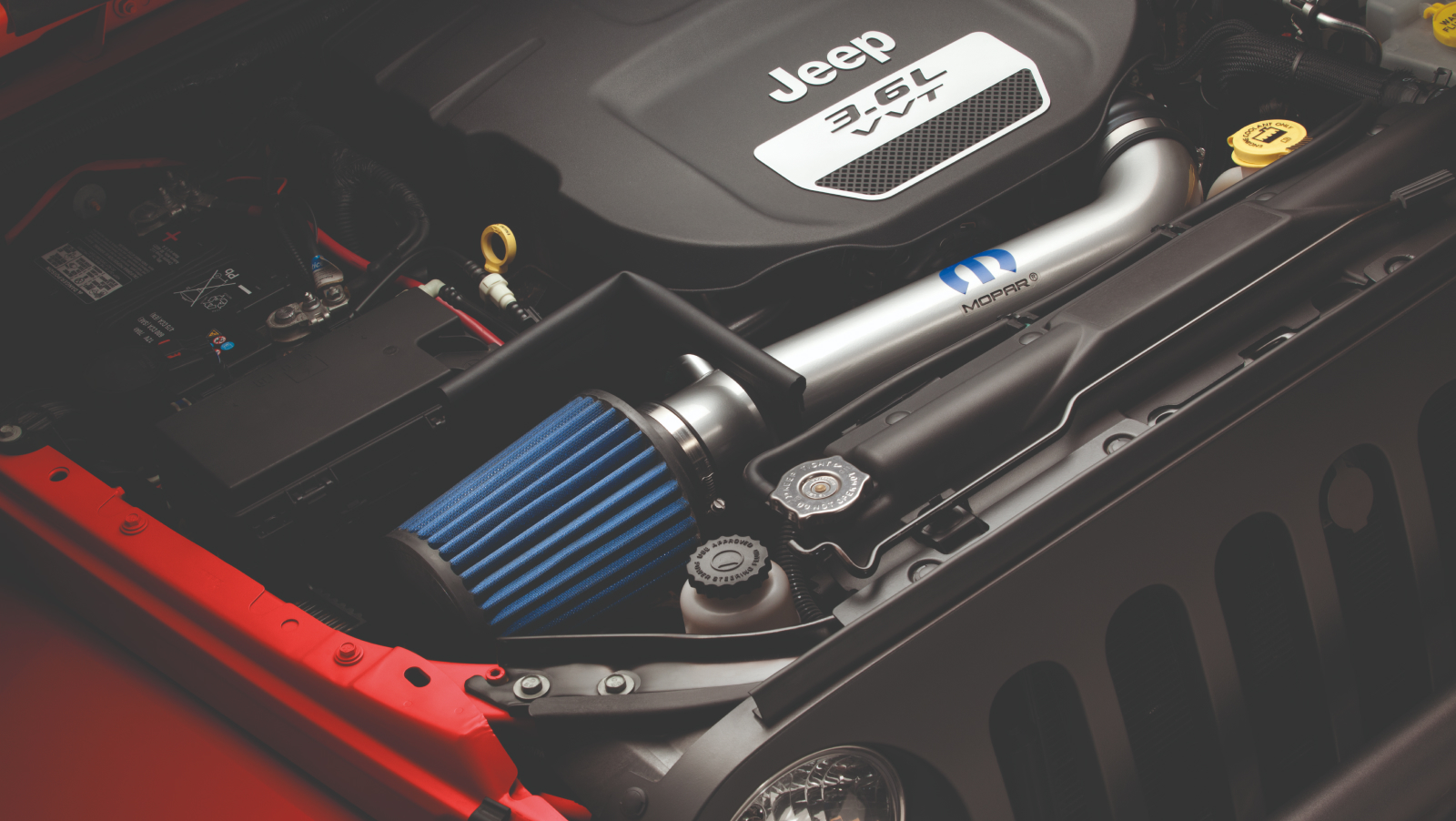
Reusable filters are available and cold air intakes will provide noticeable horsepower and
torque gains compared to the standard air cleaner housing and paper filters. However, it is important that they are
specifically designed and rigorously tested to fit and work properly with your vehicle. You can find the right Mopar
performance air filter or cold air intake for your vehicle at:https://store.mopar.com/performance
As always, your Chrysler, Dodge, Jeep or Ram dealers are happy to do all of this service and more using Mopar
original equipment manufacturer (OEM) parts to ensure your vehicle will continue to provide the best power,
performance and durability you’ve come to expect.