

 es / us
 en / ca

You are permanently removing this notification from your Owner Site Notification Feed.
Do you wish to proceed?
Mopar® OEM Engine Oil Guide for Chrysler, Dodge, Jeep® and Ram Brand Vehicles
Keeping up with regular engine oil changes is one of the most important things you can do to protect your vehicle’s performance, efficiency and longevity. Whether you drive a Chrysler, Dodge, Jeep® or Ram Brand vehicle, following the manufacturer-recommended oil change schedule helps your engine run like new for years to come.
In this Mopar® OEM guide, we answer the most common oil-change questions and explain how to choose the right engine oil, oil filter and service interval for your vehicle.
- How often should I change my oil and why is it important?
- What does it mean if my oil light comes on?
- How to Check Engine Oil Level
- How often should I check my oil level?
- What does engine oil do?
- Why is it important to change your oil regularly?
- Types of Engine Oil Explained
- What type of oil does my Chrysler, Dodge, Jeep or Ram brand vehicle take?
- Can I switch oil type?
- What do the numbers on an engine oil bottle mean?
- What engine oil should I use?
- Oil Capacity: Why it Matters
- Mopar OEM Oil vs. Aftermarket Oil
- Choosing the Right Oil Filter
- Pro Tips
- Can I change my oil myself?
How often should I change my oil and why is it important?
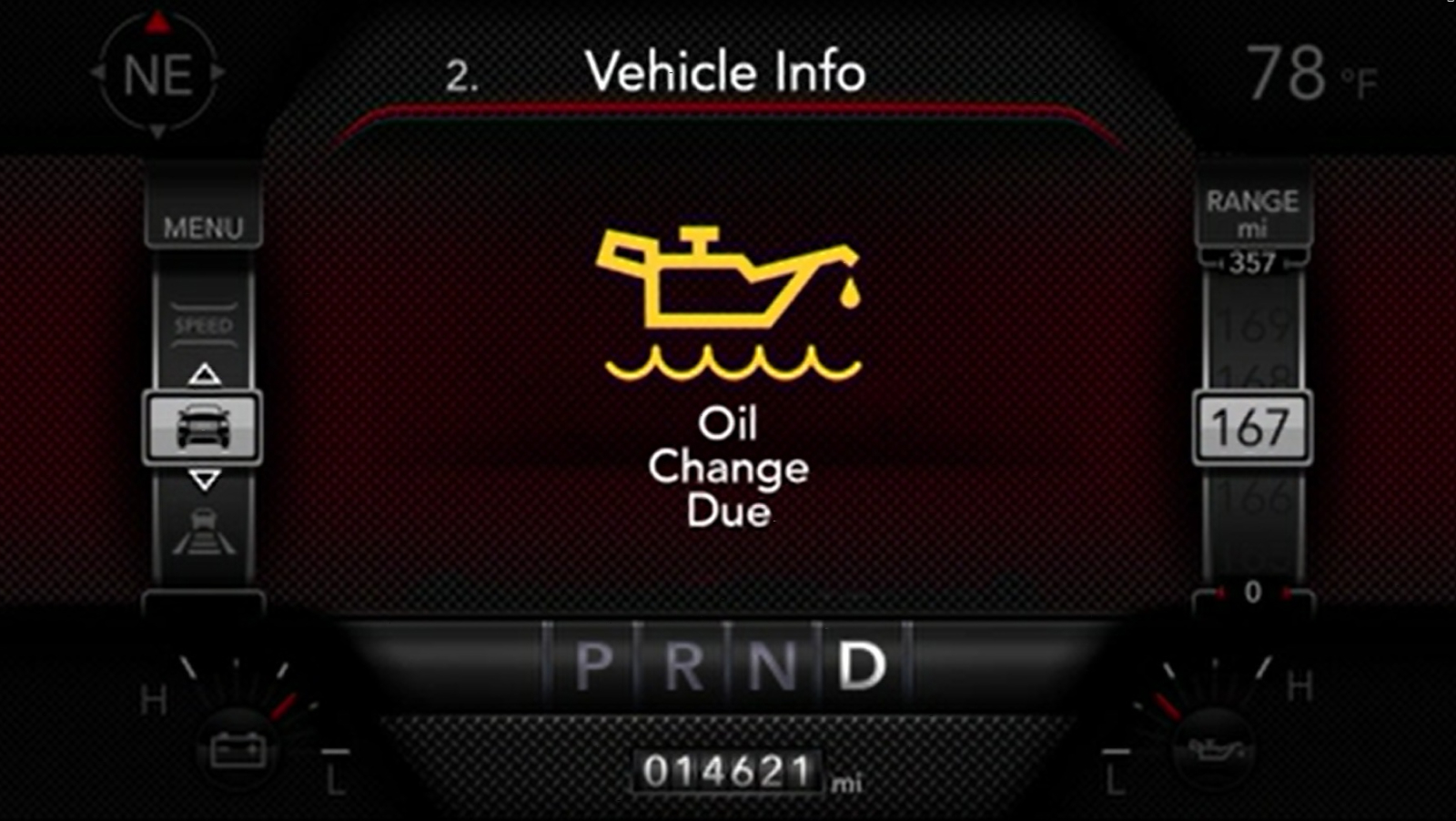
For newer models, you should change your engine oil and oil filter when the “Oil Change Due” message appears in your instrument cluster. Once this alert displays, you should schedule an oil change within the next 500 miles. For more details on the oil light, see “What does It mean if my oil light comes on” below.
Do you really need to change your oil every three months or 3,000 miles? Not likely. While it is still possible that you may need to change your oil at 3,000 miles based on your driving habits, advancements in engine technology and the use of synthetic engine oils have extended these intervals significantly, sometimes up to twice or even three times that.
Under normal driving conditions, most vehicles average around 7,500 miles between oil changes. You should never exceed 10,000 miles or 12 months, whichever comes first.
Driving habits that may shorten oil-change intervals include:
- Frequent stop-and-go city driving and/or with long periods of idling
- Towing or hauling heavy loads
- Driving in extreme heat or cold and/or dusty/dirty roads
- Hilly or mountainous terrain
What does It mean if my oil light comes on?
There are two different lights that may come on: a maintenance reminder and a critical warning.
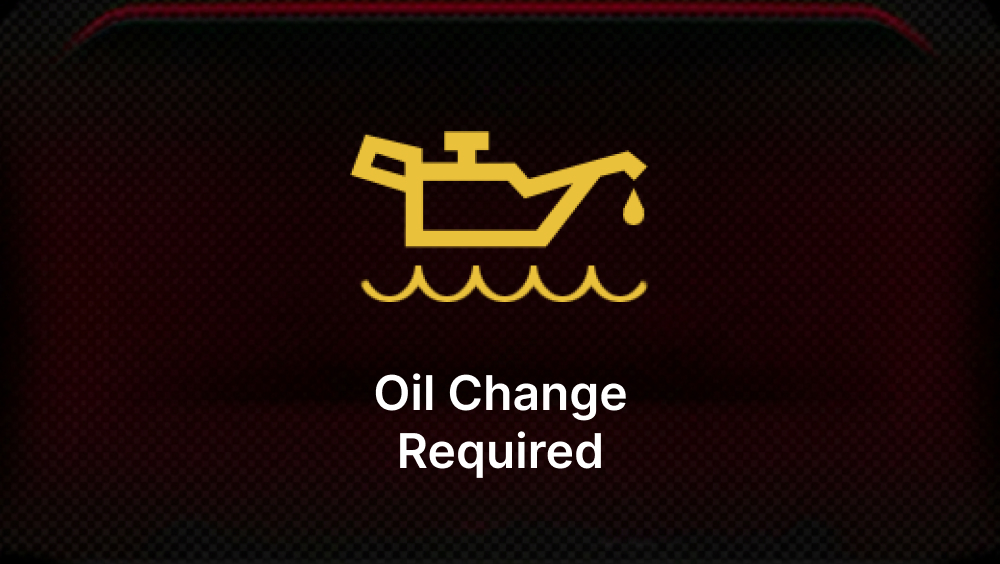
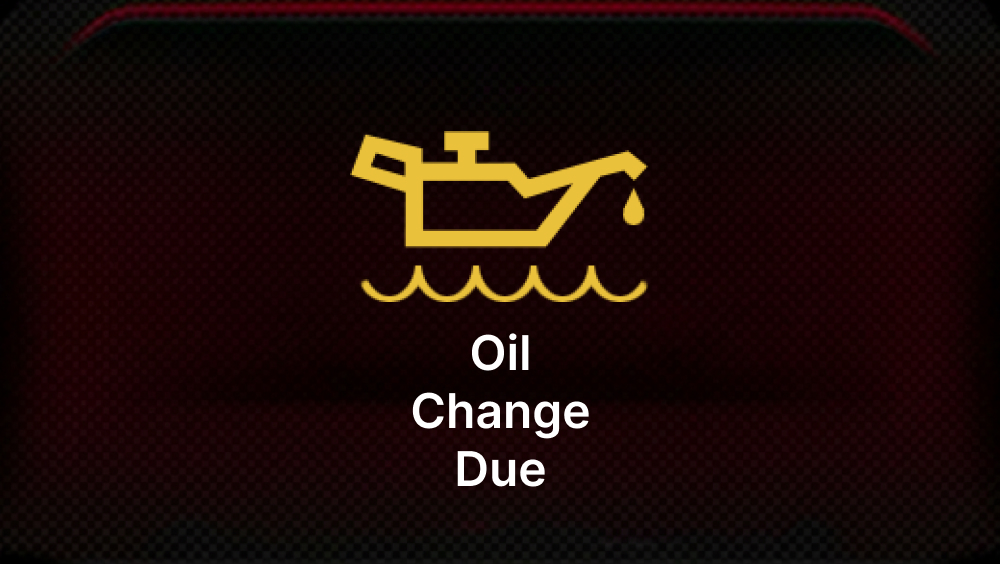
The first is your oil change maintenance reminder which, depending on the year, make and model, looks like an old oil can and may be accompanied by a “Oil Change Required” or “Oil Change Due” message. When this appears, schedule an oil change within 500 miles.
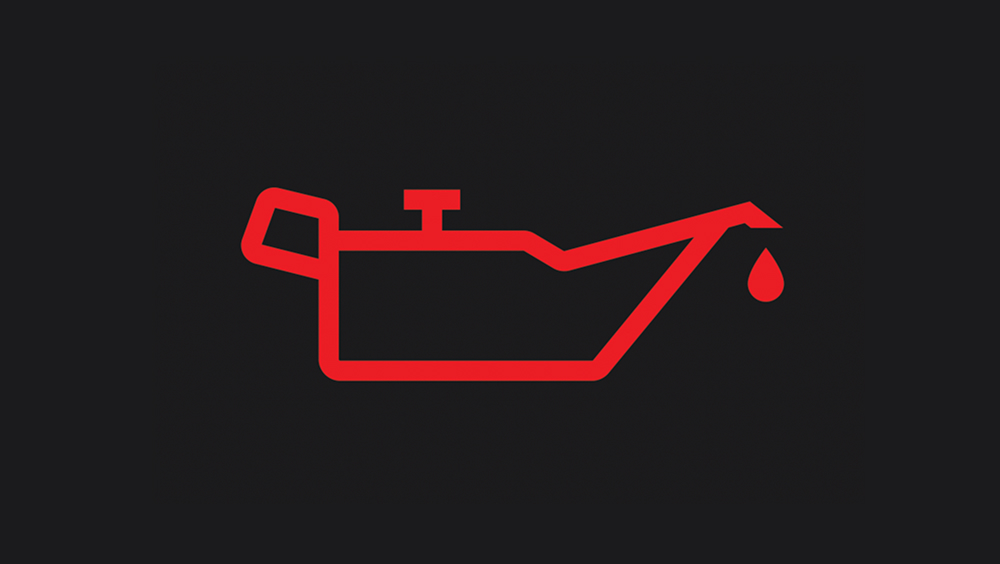
The second is the Oil Pressure Warning which is a red light in the shape of an old-fashioned red oil can and may be accompanied by a chime, “Low Oil Pressure” or simply “Oil” message. This is a critical safety warning requiring immediate attention to stop the vehicle as soon as it’s safe to do so, turn off the engine and check the oil level. Ignoring this warning can lead to engine damage.
For information on other warning lights, see Dashboard Warning Lights & Symbols | Mopar
How to Check Oil Properly
1. Park on level ground
2. Wait 5–10 minutes after shutting off engine
3. Open your hood and locate the dipstick
4. Remove, wipe clean, reinsert completely and remove again
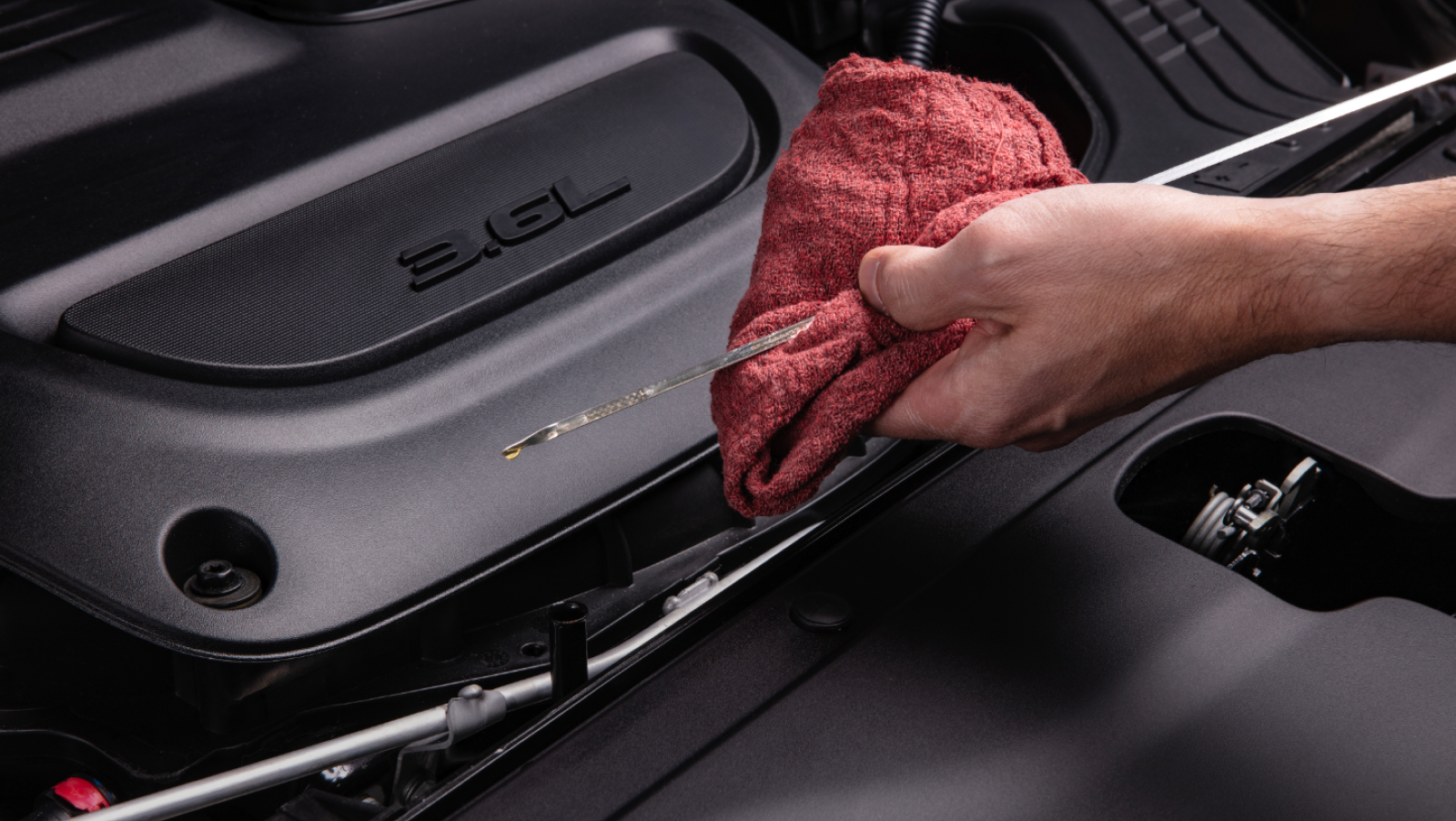
5. Look at the markings on the bottom of the dipstick to confirm the oil level is within the safe zone – there are four possible types:
a. Crosshatched zone
b. Crosshatched zone marked SAFE
c. Crosshatched zone marked with MIN at the low end of the range and MAX at the high end of the range
d. Crosshatched zone marked with dimples at the MIN and the MAX ends of the range
6. Always maintain the oil level within the crosshatch markings on the dipstick
7. If the oil level is below the safe zone, add more
8. If the oil level is above the safe zone, remove oil using the drain plug on the oil pan
For owners of Dodge Brand vehicles, see the following video from DodgeGarage.com, 1/31/26
Signs your oil may be low include:
- Decreased performance
- Reduced fuel economy
- Engine noise or overheating
- Blue or gray exhaust smoke
- Burning oil smell
How often should I check my oil level?
You should check your oil level at regular intervals, such as every month and before a long trip.
What does engine oil do?
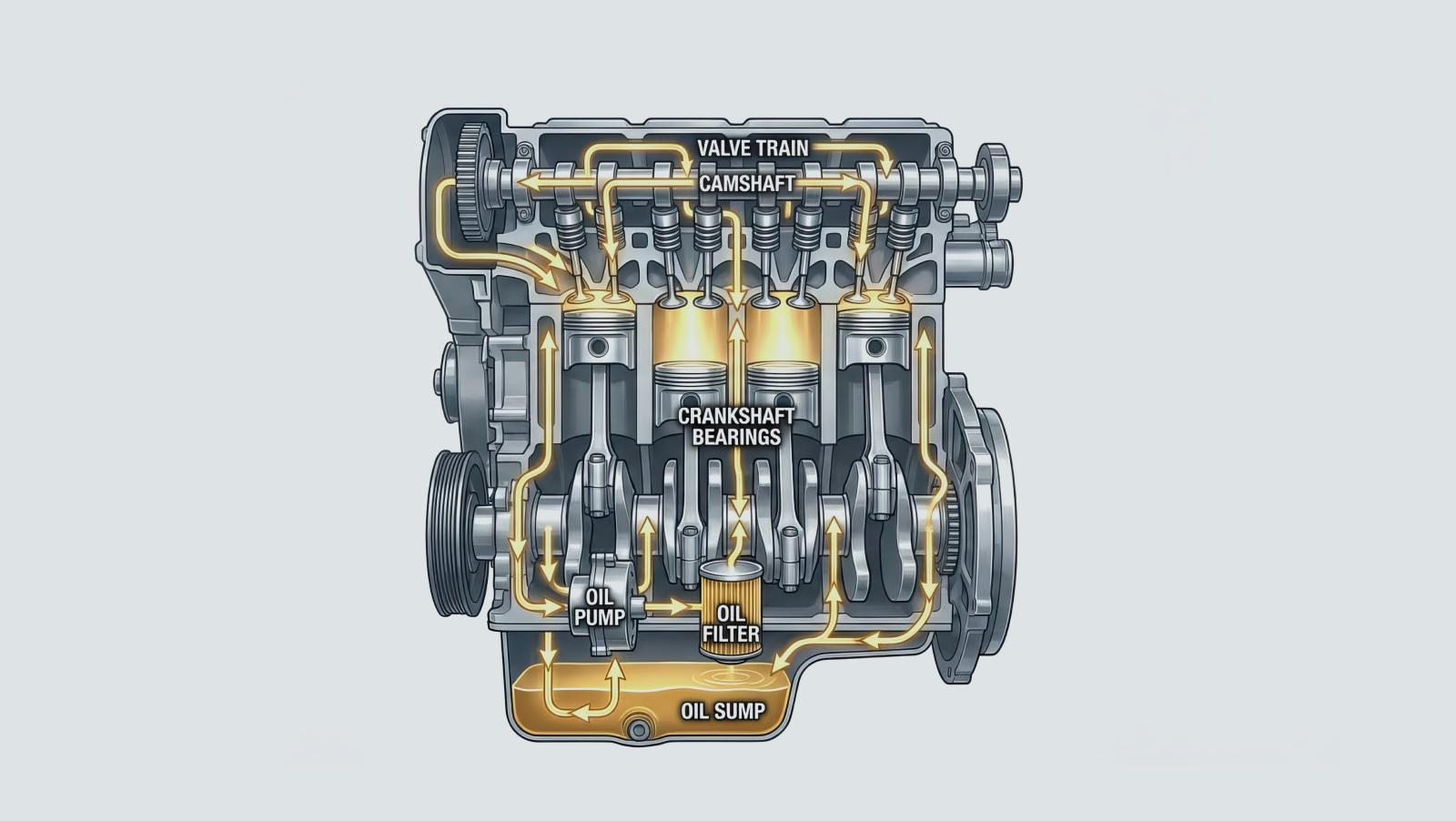
Engine oil is the lifeblood of your engine. It performs four critical functions:
- Lubricates moving engine components to reduce friction
- Cools engine parts by carrying heat away
- Cleans by trapping dirt, debris and contaminants
- Protects against corrosion and premature wear
Oil circulates throughout the engine creating a protective film between engine parts, keeping them from scraping against one another which reduces friction, making it easier for parts to move to maximize power and efficiency. Detergents suspend contaminants and carry them to the oil filter where they are trapped before returning to the oil pan, where the cycle begins again.
Why is it important to change your oil regularly?
As your oil filter traps more and more contaminants and particulates, its performance is reduced making it less effective. Therefore, it’s critical to replace the oil and filter periodically to keep your engine clean and maintain optimal performance. If unchecked, these can build up over time which will develop a thick, sticky sludge which will cause more friction, more heat, poor gas mileage, reduced performance, engine wear and potentially costly repairs.
Modern engines are more advanced than ever, and so are engine oils. While the old “3 months or 3,000 miles” rule is outdated for most vehicles, oil still degrades over time.
As contaminants accumulate:
- Oil thickens and forms sludge
- Engine friction and heat increase
- Fuel economy and performance decrease
- Long-term engine damage becomes more likely
Replacing both the engine oil and oil filter at the proper intervals prevents these issues and helps avoid costly repairs. For more information, see “How to Check Oil Properly” above
Types of Engine Oil Explained
There are three main types of engine oil available today:
Conventional Oil
- Lowest upfront cost
- Breaks down faster
- Requires more frequent oil changes
Synthetic Oil
- Highly refined with a uniform molecular structure
- It lasts longer and resists breaking down
- Better cold starts and high-temperature protection
- Maintains fuel economy and performance
- Keeps engines cleaner
Synthetic Blend Oil
- Mix of conventional and synthetic
- Balanced performance at a lower cost than full synthetic
Most modern Chrysler, Dodge, Jeep and Ram Brand vehicles require synthetic oil due to advanced engine designs.
What type of oil does my Chrysler, Dodge, Jeep or Ram Brand vehicle take?
Your exact oil type depends on your model year, engine and vehicle platform. Always refer to the Technical Specifications section of your owner’s manual for:
- Correct oil viscosity
- Oil specification approvals
- Oil capacity
Click here to find your owner’s manual online.
Can I switch oil type?
Yes, you can switch oil types safely by following these rules:
- Always use the manufacturer-recommended viscosity in your owner’s manual
- Do not mix different viscosities
- Switching oil types is best done during a full oil change
Adding synthetic oil to conventional oil (or vice versa) results in a synthetic blend.
What do the numbers on an engine oil bottle mean?
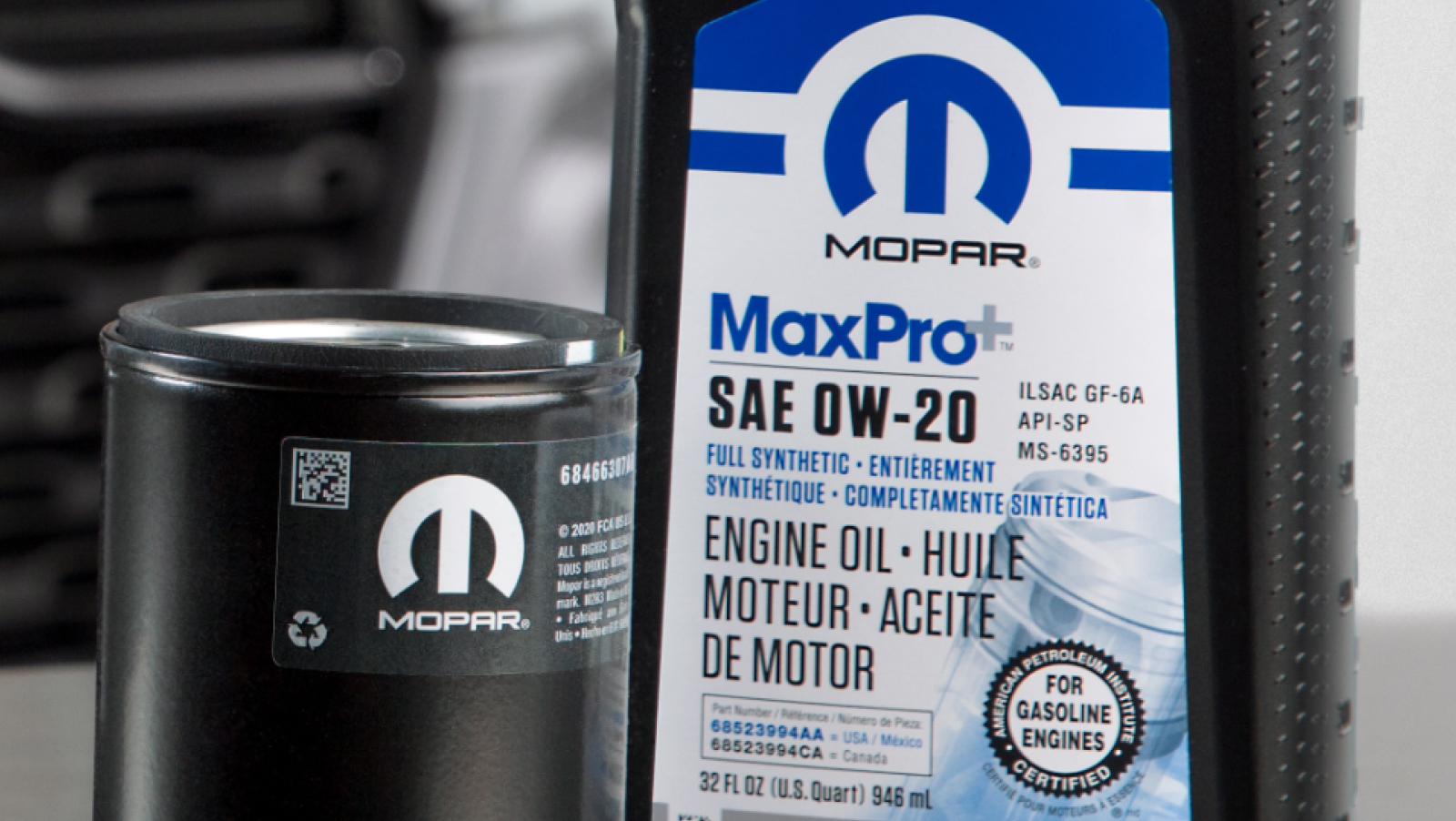
Oil viscosity – its resistance to flow (thickness) or how easily oil pours – is shown as two numbers, such as 0W-20:
- First number (W): Cold-temperature viscosity
- Second number: Viscosity at operating temperature
Lower numbers improve cold starts and provide better performance and fuel economy. Higher numbers typically provide better protection, especially at higher temperatures. Always use the viscosity specified in the Technical Specifications of your owner’s manual. Click here to find your owner’s manual online.
What engine oil should I use?
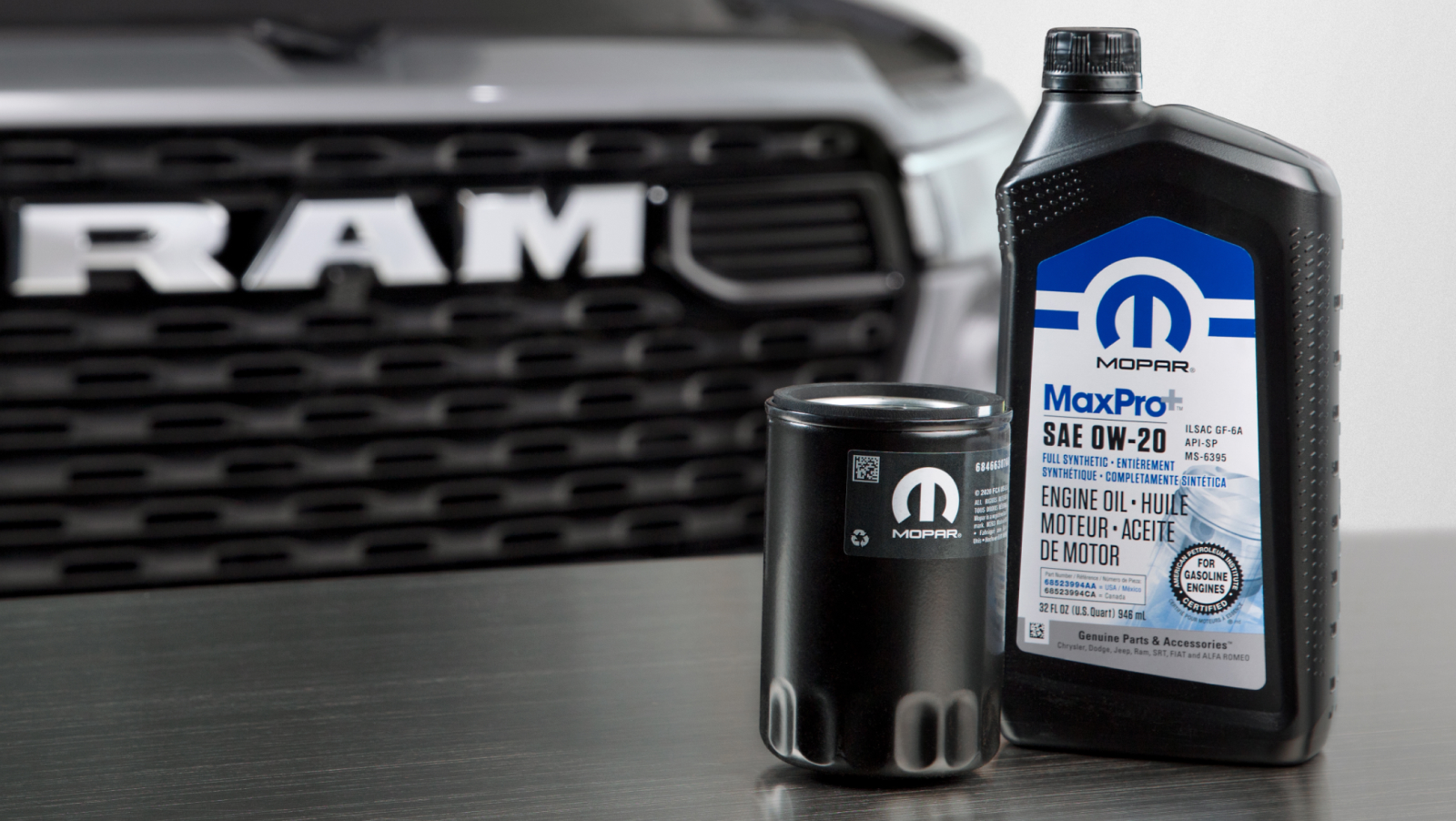
Only use manufacturer-approved engine oil. Mopar Engine Oil is specifically formulated by Chrysler, Dodge, Jeep, Ram engineering for your vehicle and is widely available through your dealer, auto parts stores and/or big box retailers.
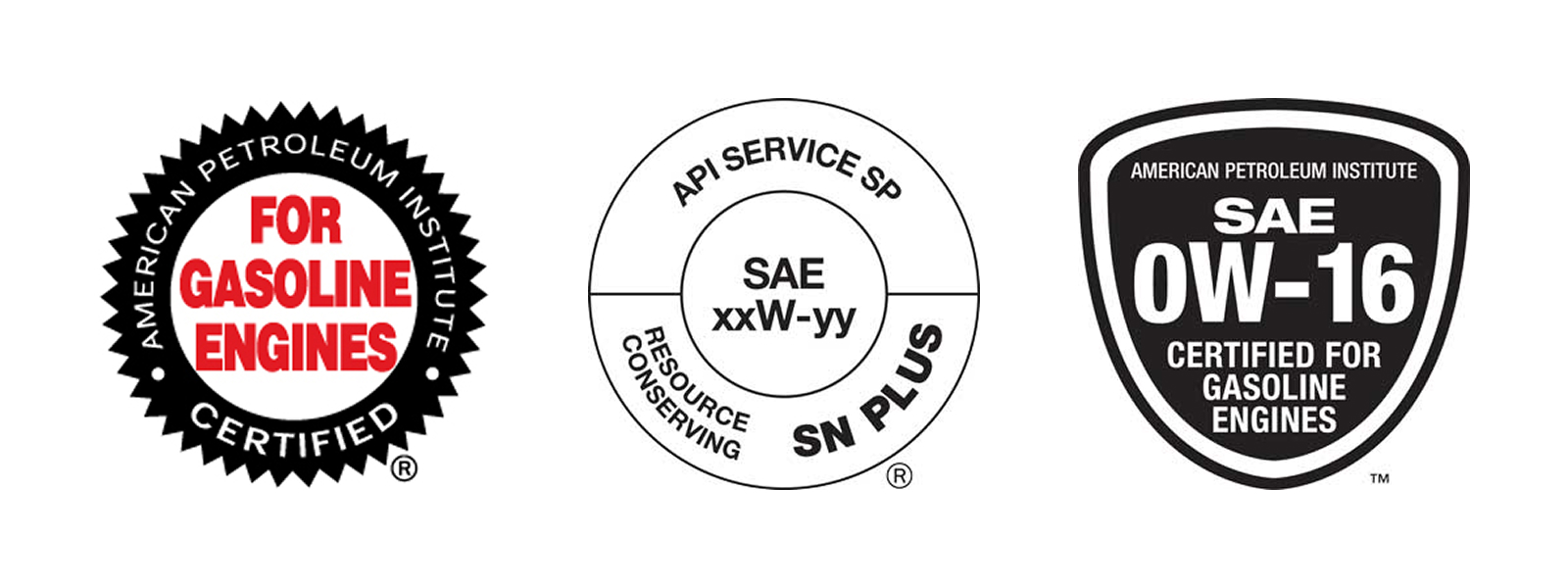
As engine technology changes, so do the American Petroleum Institute (API) standards. Always look for the API “starburst” and “donut” or “shield” symbol to confirm it meets these standards and verify the bottle includes the correct API service code listed in the Technical Specifications section of your owner’s manual. Click here to find your owner’s manual online.
Oil Capacity: Why It Matters
Oil capacity varies depending on your year, make, model and engine. Knowing your oil capacity helps you:
- Purchase the correct amount of oil
- Avoid overfilling during oil changes
- Properly top off low oil levels
Check the Technical Specifications section of your owner’s manual for exact capacity specifications. Click here to find your owner’s manual online.
Mopar OEM Oil vs. Aftermarket Oil
Not all engine oils are created equal. Mopar OEM oil was formulated by the manufacturer for your specific vehicle, its engine’s tolerances and performance requirements.
Using inferior oil may result in:
- Reduced performance, fuel economy and protection
- Increased wear
- Potential warranty concerns
For best results, stick with high-quality Mopar oil and filters.
Choosing the Right Oil Filter
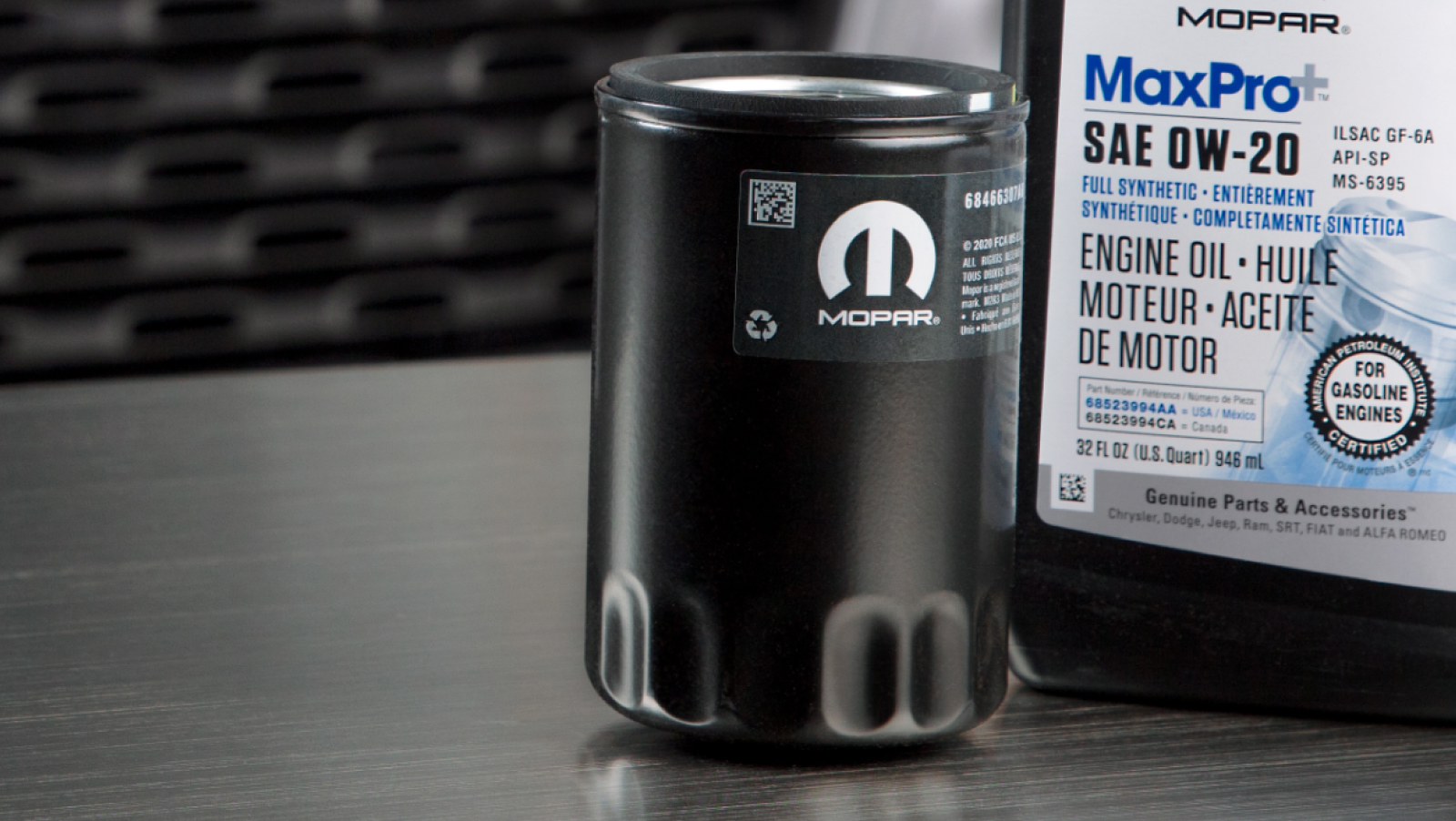
Always replace your oil filter with every oil change.
Whenever choosing an oil filter, you should always choose a full-flow type disposable oil filter. Mopar oil filters:
- Meet or exceed SAE/USCAR-36 standards
- Provide superior filtration and engine protection
Find the correct filter at store.mopar.com/oil-filters, select your vehicle’s brand, model and year. You can also call your local Chrysler, Dodge, Jeep or Ram dealer’s parts department which has a large volume of Mopar oil filters in stock. Mopar oil filters are also widely available at auto parts stores and big box retailers.
Pro Tips
- To find your owner’s manual online:
- Click on Mopar.com/En-US/Owners-Information to go to the Mopar Owner’s Information page
- Select your vehicle’s brand (ex. Chrysler, Dodge, Jeep®, Ram or FIAT®)
- Select your vehicle’s model (ex. Wrangler, Grand Cherokee, etc.)
- Select your vehicle’s model year (ex. 2026, 2025, etc.)
- Click on OWNERS MANUAL to view it online, download it or order a printed manual
- Confirm your filter part number(s) using your year, make and model
- Verify authenticity of genuine Mopar Parts
- Check filter availability online first to avoid running around town
- Order your next Mopar oil filter in advance so that you have one ready and waiting each time you need to change your oil
Can I change my oil myself?
Yes — many owners do. With the right tools, preparation and safety precautions, DIY oil changes can become easy. Mopar will soon publish a step-by-step guide.
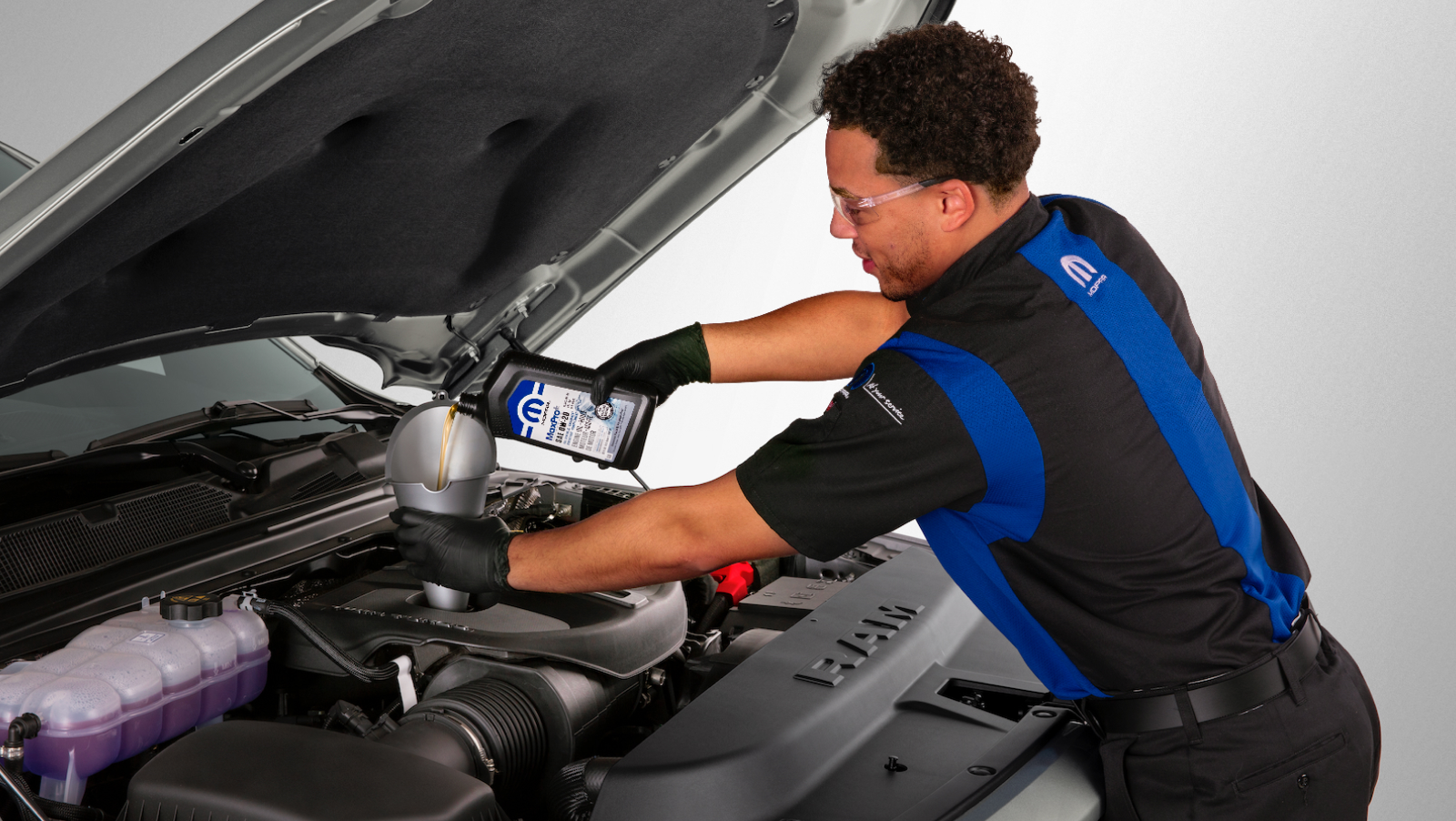
Prefer professional service? Your local Chrysler, Dodge, Jeep or Ram dealer is always ready to help using Mopar original equipment manufacturer (OEM) parts to ensure your vehicle will continue to provide the best power, performance and durability you’ve come to expect.
Check Oil Services & Exclusive Offers | Mopar® Certified Service for current offers, to schedule service and for more information.
Want ways to help you save? Check out Mopar's latest offer--Get 2 Oil Changes for $145 here.
Mopar. At your service.